
The Porch Steps
The porch at their late mother’s house is unsafe, and Claire must ask the brother she barely speaks to for help. Repairing the wood proves simpler than their history.

The third step gives way while Claire is carrying a box of mason jars out of her mother's house.
She doesn't fall. She catches the porch railing, which bends alarmingly under her hand, and manages to set the box on the landing without breaking anything. A long strip of wood shifts beneath her shoe. She stands still, one foot in the yard and the other on the porch, listening to the late-summer insects. Her mother's wind chime taps a note that never quite resolves.
The house is going to be sold in five weeks. A realtor has asked her to remove the remaining household things and arrange an inspection. Claire has spent three Saturdays cleaning shelves, sorting photographs, and discarding stacks of grocery circulars. She is fifty-two, a home-health aide who has spent much of her adult life observing where older people might trip. She knows that a loose step isn't a problem to walk around and forget. She also knows the person who understands the construction of this porch is her older brother, Ben, whom she has avoided for almost two years.
She looks at his number on her phone. It is still listed as Ben—home, even though he moved out of their childhood house decades ago. She types: Porch steps unsafe. Need someone qualified to assess and repair before showing. Can you recommend anyone?
The reply comes after an hour: I can look tomorrow. Don't use the steps until we know what's wrong.
She wants to write that she already knows not to use them. Instead she thanks him, places a conspicuous temporary barrier by the porch, and calls the realtor to tell her nobody should enter by that route. The house has another safe entrance at the side. Claire feels oddly relieved by how much she can handle without Ben and oddly ashamed by the relief.
He arrives Sunday with a tape measure, a small toolbox, and the same blue cap he wore to their mother's funeral. His truck tires raise pale dust along the driveway. Claire stands by the side door and watches him inspect the damaged wood from the yard.
"That railing isn't good either," he says.
"I noticed."
"You could've called earlier."
"I called when the step shifted."
The conversation could end there. Instead he looks up at the porch roof and says, "Mom used to tell me she wanted this fixed."
"She told everybody a lot of things," Claire replies before she can stop herself.
Ben closes his toolbox. "I didn't come to argue."
"Then don't start with what Mom told you."
They are standing ten feet apart in the yard, adults old enough to be grandparents, and Claire feels herself becoming seventeen. That was the year Ben left town to work with a contractor. She had admired his courage then. Later, when their mother's health deteriorated, admiration became a ledger: Claire counted appointments attended, prescriptions collected, nights interrupted; Ben counted projects finished and money sent. Neither ledger included the other's exhaustion.
At the hospital two years before their mother died, Claire asked him to come home more often. He said she wanted credit for doing what any daughter would do. She said he preferred sending checks to sitting through the difficult hours. The words traveled between them with the terrible accuracy of things chosen to wound.
"I sent money because the house needed it," Ben says now, as though the dispute has been continuing uninterrupted. "You know that."
"I know you sent money. I also know who was here."
"I came when I could."
"You came when you could fit it around work."
He looks away. The sun is warm enough to bring the smell of pine resin from the trees beside the drive. For a moment Claire imagines telling him about the night their mother called her by the name of a long-dead cousin, and Claire sat beside the bed trying not to cry. Then she imagines Ben describing how it felt to be told his efforts were worthless every time he visited. Neither story would cancel the other.
"Can we deal with the porch first?" he asks.
Claire nods. It is the most sensible thing either of them has said all morning.
Ben kneels on the grass to examine the damaged section without putting weight on it. He points out what he can see and what he can't determine without a closer professional assessment. Claire asks him to contact someone who can make the steps and railing safe to use. He recommends a licensed local contractor he's worked with and offers to explain the problem to her. She says she will arrange the appointment herself.
"Fine," he says.
"Not because I don't trust you. The realtor needs the dates and paperwork, and I'm coordinating that."
"Fine," he repeats, this time less sharply.
They work in a way that resembles cooperation from a distance. Ben moves an empty planter out of the walkway. Claire clears the side entrance. They find the old porch light switch and discover the light doesn't work either. Ben writes down the concern for the contractor rather than opening the electrical box. There are things he knows and things he knows better than to touch without proper help.
Around noon Claire brings out two glasses of iced tea. Ben accepts his but keeps standing. They sit eventually on folding chairs beneath the crepe myrtle, far enough from the porch to avoid pretending it is ready for visitors.
"Do you remember Mom's Sunday biscuits?" Ben asks.
"I remember you ate half of them before anyone came to the table."
"I was a growing boy."
"You were thirty-five."
He laughs, surprised. Claire almost laughs too. Then he says, "She promised me I'd get Dad's workshop tools."
There it is: the disputed promise, waiting in the yard like a piece of furniture that won't fit through a doorway. Their mother's will had not named the tools separately. Claire had been keeping them until the estate inventory was settled. Ben believed a promise had been made during one of his visits; Claire had never heard it. She could not simply hand over assets from the estate because he remembered a conversation differently.
"We need to handle that properly," she says. "I'm not saying you invented the promise. I'm saying I can't decide it alone."
"I never said you had to."
"You said last month I was keeping Dad's things from you."
Ben stares at his tea. "I shouldn't have said it that way."
It sounds almost like an apology. Claire waits for more, for the sentence that will acknowledge every lonely night and every unfair remark. Ben instead says, "I felt shut out."
"I felt abandoned," she answers.
The air around them seems to tighten. She could force the whole history into this one afternoon. Ben could leave. Nothing about the porch would improve.
"We both said things," he offers.
Claire shakes her head. "That makes it sound like the things were all equal. I don't think they were. But I shouldn't have told you at the hospital that sending money was the same as not caring. I know you cared."
Ben looks at her then, really looks. "Thank you."
"I'm not ready to say everything is settled."
"Neither am I."
They finish the tea. In the kitchen afterward she finds a note in her mother's old handwriting: Tell Ben where the extra paint is. It is written on the back of an envelope, years out of date. Claire has the ridiculous urge to show it to him as evidence of something. Instead she slips it into a folder with the estate paperwork and recognizes that a scrap of paper can't bear the weight of a whole family.
By Tuesday the contractor has examined the porch and prepared a proposal. Claire reviews it with the realtor and arranges for the work to be done before prospective buyers visit. She sends Ben the date because he asked to know, not because she needs his permission. He replies that he can move the larger planters before the crew arrives. She accepts the offer.
They cross paths twice during the repairs. The contractor handles the work; Ben carries supplies to a clear area when asked; Claire keeps the side walkway open and answers questions about access. Once Ben says, "Mom would have hated the new color." Claire answers, "She'd have complained about the price first." They share a smile that doesn't require discussing the previous year.
On the day the work is completed and inspected, the realtor comes by with a prospective buyer and her mother. They enter through the repaired front porch after receiving confirmation that it is ready for use. Claire watches from the yard as the older woman pauses on the landing and looks around at the trees. She says the porch gets beautiful afternoon light.
Ben stands beside Claire near the truck. "I didn't know whether you'd want me here," he says.
"I wasn't sure either."
He turns his cap in his hands. "Could we talk about the tools with whoever's handling the estate? Maybe next week?"
"Yes. In that setting."
"And sometime," he says, then stops. "Sometime maybe we could talk about Mom without arguing about what either of us did."
Claire watches the wind chime move. She thinks of a verse their mother loved, about living at peace as far as it depends on you. As a child Claire had heard it as a demand to make every quarrel end before bedtime. She understands now that peace may begin with refusing to make the next injury. It may also mean choosing a safer, narrower conversation instead of surrendering the truth.
"Not this week," she says. "But I could try another day."
Ben nods. No embrace follows. He doesn't ask her to forgive everything, and she doesn't ask him to agree with every memory. When he leaves, his truck rattles down the drive toward the two-lane road. Claire walks to the porch, checks the smooth new railing with her palm, and takes one step up. It holds. She looks back toward the empty yard. A step that holds is not the same as a home made whole. For today, it is enough to stand on.
Stories of Faith & Life
 HospitalityThe Last Table in the DinerAfter a long night shift, Rosa finds a customer’s sketchbook under the last table in the diner. One ordinary exchange offers kindness without demanding all she has left.Read the story →
 NeighborsThe Snow on Maple StreetA routine winter outage brings neighbors into closer contact than they intended. Old tensions do not vanish, but practical care begins to reshape a block.Read the story →
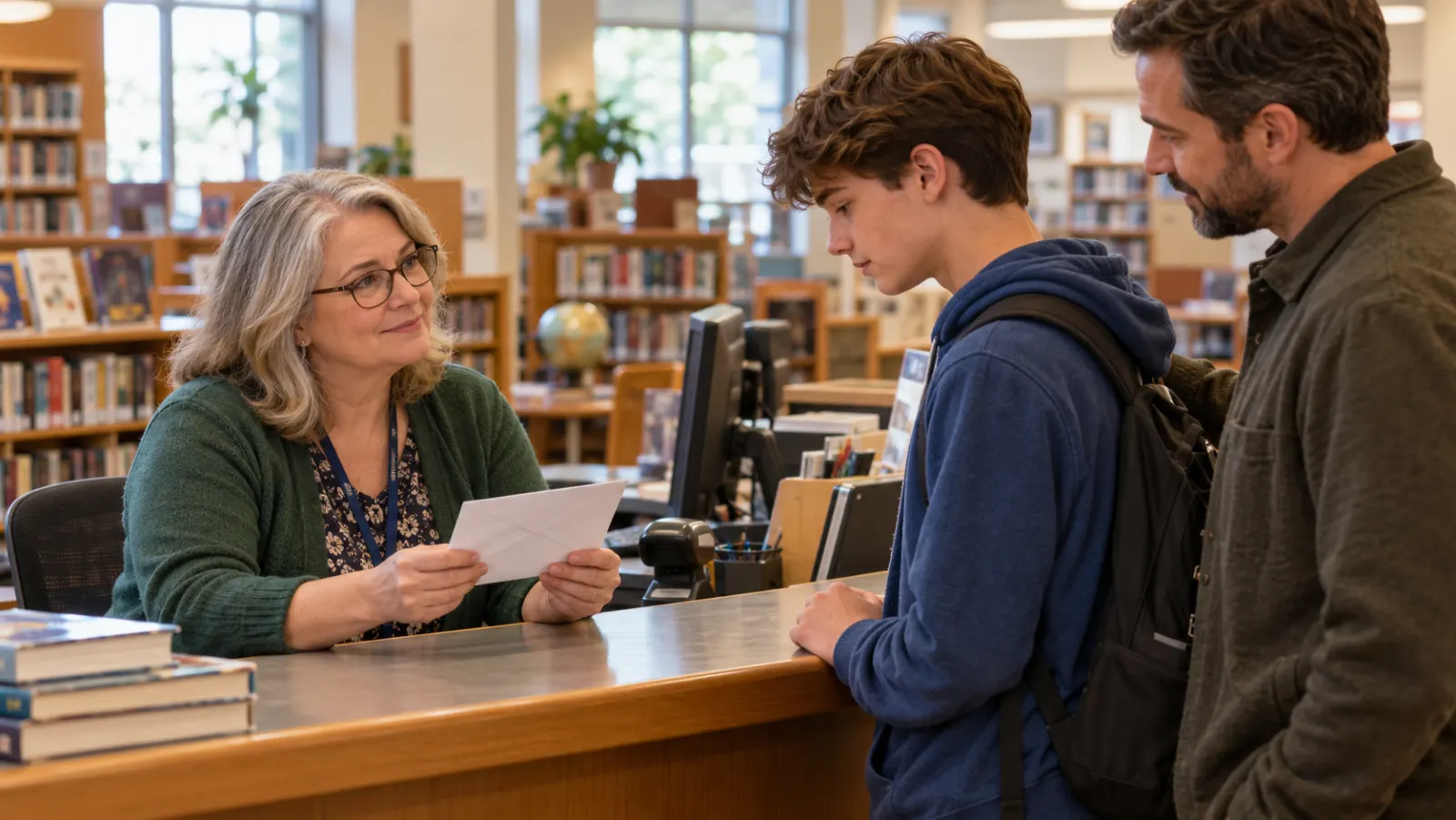 ListeningThe Letter Behind the Library DeskAn unsigned note left inside a library book asks whether anybody would notice an absence. Nora chooses careful support over curiosity or promises she cannot keep.Read the story →