
Helping Siblings Resolve Conflict Without Favoritism or Shame
Sibling conflict is a learning opportunity only when caregivers stop harm, refuse humiliation and facilitate fair problem-solving.
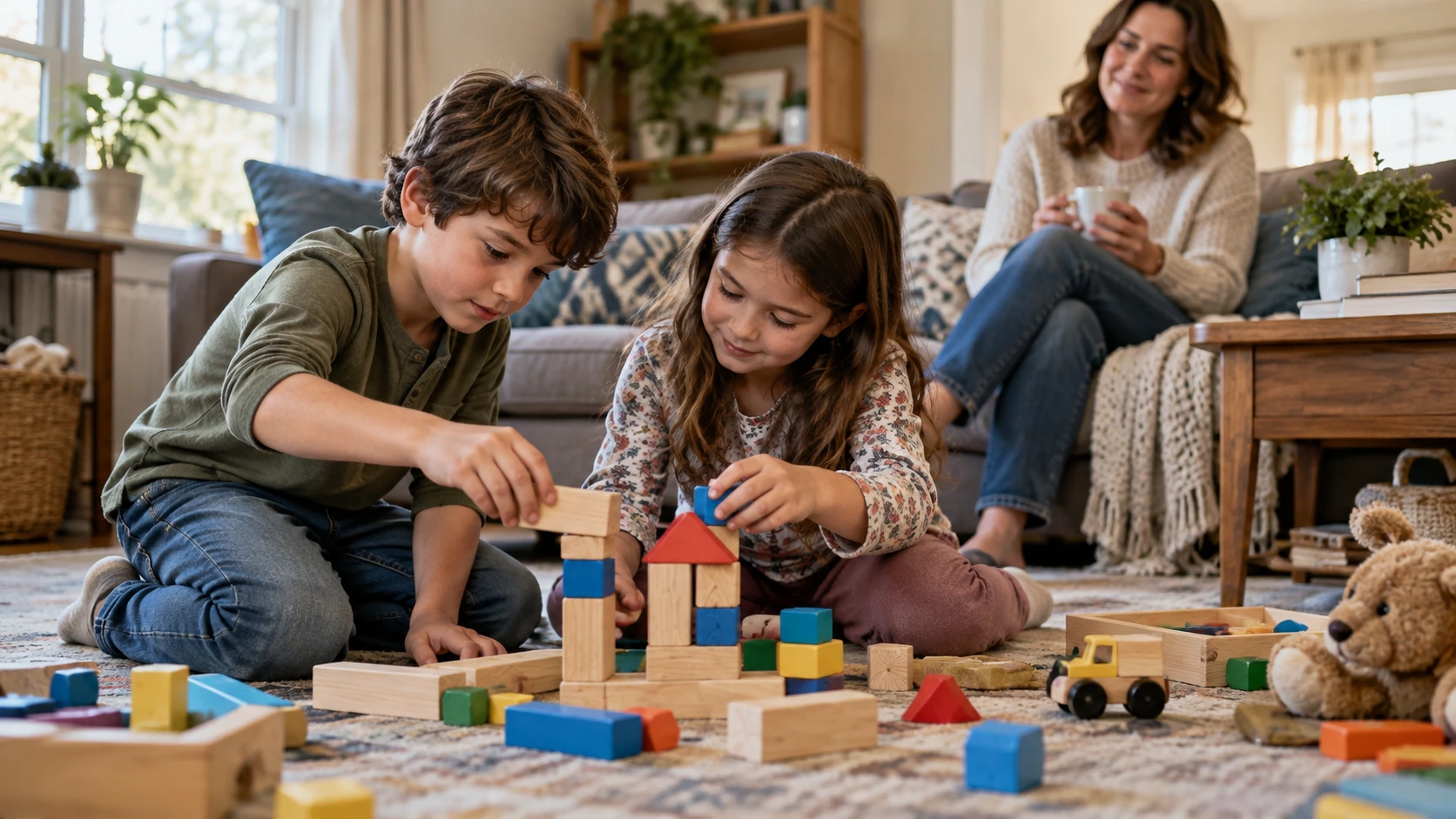
A crash comes from the living room, followed by two voices at full volume. The block tower is on the floor. One child says the other knocked it down; the other insists it was already leaning. You arrive just in time to hear, “You always believe her!”
The broken tower is easy to see. The deeper concern is harder: each child wants to know whether the adult will listen, whether the rules apply fairly, and whether there is any path back to enjoying the afternoon together.
Sibling conflict can become exhausting, especially when the same arguments return. But it can also be an opportunity to practice safety, truthfulness, repair, and respect—provided the adult does not reduce the encounter to identifying a winner and a loser. A Christian commitment to impartiality should make parents more attentive to differences in age and power, not less.
First, Stop Harm
Before deciding who started the argument, protect the people involved. If someone is hitting, throwing objects, or threatening another child, separate them calmly and remove immediate hazards. A parent might say, “I won't let anyone hit. We're going to sit apart for a moment, and then I will listen to each of you.”
Avoid beginning with a forced apology while emotions are high. A child who is frightened or furious may say words without understanding them, and another child may hear those words as an attempt to make the problem disappear. Safety and regulation come first; conversation can follow.
Not all sibling problems are ordinary disputes. Repeated intimidation, coercion, threats, or targeting of a younger or more vulnerable child requires adult protection and more serious intervention. Do not call bullying “normal sibling rivalry” simply because the children are related. A child's right to safety is more important than a parent's wish for a peaceful-looking home.
For lower-stakes disagreements, make the pause short and predictable. You do not need a dramatic interrogation. A few minutes to breathe, get water, and see that nobody is being hurt may be enough. Some children need a different pace or a quieter location, especially when sensory or communication needs are involved.
Proverbs 15:1 is wisdom literature about the power of gentle speech in the face of anger. It is not a command for a vulnerable child to pacify an aggressor. Adults should model steadiness and prevent harm; they should not put responsibility for family safety on a child who is already overwhelmed.
Hear Each Person Separately if Needed
Children tell stories from inside their feelings. That does not mean they are deliberately dishonest. One remembers the block being bumped; another remembers a rule about who was allowed to build. Sometimes an older sibling's account is more articulate, while a younger child's account is less organized. Fluency should not decide who deserves to be heard.
Ask each child for a brief description without interruptions: “Tell me what happened from where you were standing.” Reflect back what you heard. If both children keep cutting one another off, listen separately and then summarize the shared facts in neutral language.
Do not promise that every disagreement has one clear guilty party. A tower might have fallen by accident, yet someone then shouted a hurtful insult. Both things can be addressed without inventing intent. Say, “The blocks were knocked over. We are not completely sure how. We do know that calling each other names needs to stop.”
Take accusations of favoritism seriously enough to examine your habits. Does one child routinely get more time to explain? Are you more likely to believe the child whose temperament resembles yours? Do you assume the older child should always know better? Being fair requires more than declaring that you love both children equally.
James 2:1–9 challenges partiality in the Christian community, especially the practice of treating people differently according to status. Its immediate topic is not sibling discipline, and parents should not pretend that it offers a complete conflict-resolution manual. Nevertheless, it warns against assigning greater worth to one person because of outward advantages. Within a household, that can prompt honest questions about whose words receive attention.
Fair Is Not Always Identical
A six-year-old and a thirteen-year-old cannot reasonably have all the same responsibilities or freedoms. Equal dignity does not require identical rules. The older child may be permitted to use more complex equipment; the younger may need help putting away toys. Explain these differences as differences in needs and capacities, not evidence that one child is favored.
The trouble begins when developmental difference becomes a permanent burden. “You're older, so you always have to give in” teaches the older child that their interests matter less. “She's the baby, so she can do what she likes” tells the younger child that they are not expected to grow in responsibility. Both patterns can intensify resentment.
A fairness check can be practical. Ask: Have I listened to each child? Have I required one to absorb the cost of keeping peace repeatedly? Are the consequences related to what each child actually did? Is there a factor—age, disability, fatigue, trauma, or a power difference—that requires a different response?
For example, if an older child carefully built a model over two hours and a toddler broke it accidentally, do not order the older child to share the materials immediately or act grateful for the accident. Protect the older child's work and feelings while teaching the younger child about gentle handling. Compassion for the toddler does not mean dismissing the older sibling's loss.
Romans 12:9–18 urges sincere love, honoring others, and seeking peace as far as it depends on us. The passage is addressed to the Christian community rather than a modern nursery, but its account of mutual regard can shape a parent's goals. Peace does not mean asking one child to swallow injustice so the adults can enjoy quiet.
Repair Is More Than Saying Sorry
Once people are safe and heard, ask what needs repair. The answer may involve rebuilding the block tower, replacing broken materials, returning a borrowed item, or changing the way turns are negotiated. A sincere apology can be meaningful, but it should not be the only possible form of restitution.
Do not force children to hug or make them pronounce “I forgive you” on command. Some children need time before they want closeness. Instead, ask, “What would make this better?” The harmed child may request help, space, or a clear promise about future play. The child who caused harm can propose a realistic next action.
For the block tower, try, “Would you like help rebuilding, or would you rather keep the pieces safe and build later?” This offers the child whose work was damaged some agency. To the child who knocked it over, you might say, “What can you do to help make things right?” If they are very young, offer two concrete options.
Avoid making repair a performance for visitors or siblings. Publicly announcing who was wrong may increase humiliation without building empathy. Quiet, specific accountability is usually more useful. A child can acknowledge a choice without being labeled “the bully” or “the problem child” for every future disagreement.
If the same conflict repeats, look at the environment. Perhaps shared supplies have unclear ownership, or one child never has protected space for projects. A parent can change the structure: separate bins, agreed turns, more supervision during high-conflict activities, or a rule that unfinished creations are not to be touched without permission.
Do Not Make the Older Child a Third Parent
Older siblings can contribute to family life, and helping with younger children can sometimes be a loving choice. But their age does not make them responsible for the household's emotional peace or for continually disciplining and supervising younger siblings. Parents and caregivers retain those duties.
Listen for repeated phrases such as “Just let her have it,” “You're the mature one,” or “Don't upset your brother.” One such comment may seem harmless; a pattern can teach the older child that their needs are less important. It can also prevent the younger child from learning self-control because someone else is always required to accommodate them.
Ask for contributions that are appropriate, limited, and recognized. A teenager might choose to read a younger sibling a story for fifteen minutes, but should not routinely miss social activities or school responsibilities because adults have delegated essential care. Children should never be made confidants for adult conflicts or expected to regulate a parent's emotions.
Be honest about the family's workload. If caregiving arrangements are stretched thin, explore adult support, community resources, and practical changes rather than assigning invisible adult roles to a child. Fairness includes protecting childhood itself.
A Repeatable Family Problem-Solving Script
Try a brief sequence for the next minor dispute. Pause and protect: “Nobody gets hurt; let's separate for a moment.” Describe: “I will hear from each of you.” Name the needs: “One of you wanted the tower saved; the other wanted a turn with the blocks.” Choose a repair: “What could help now?” Plan for next time: “Where can unfinished projects go?”
This is not a courtroom procedure, and you can shorten it for younger children. If one child is unwilling to talk, return later rather than demanding immediate cooperation. The goal is to build a reliable process that does not depend on a parent's mood.
A family can practice the script when everyone is calm. Build a tower together and discuss what happens if someone bumps it. Invite children to name possible repairs. This may feel less dramatic than intervening in an argument, but predictable conversations make later conflicts easier to navigate.
Do not expect siblings to become best friends simply because they have learned a repair routine. They may have different personalities, interests, and needs for space. A good household makes room for separate identities while teaching that no one may use anger as permission to harm.
Christian love within a family is not measured by the absence of disagreement. It becomes visible when the vulnerable are protected, favoritism is examined honestly, each child is heard, and people learn that making something right matters more than winning an argument. Tomorrow there may be another fallen tower. What your children remember may be whether the adult helped them face it fairly.
Scripture: James 2:1-9 Romans 12:9-18 Proverbs 15:1
Continue Reading
 Christian Family & Parenting · 9 min readFaith in a Blended Family: Building Trust Without Forcing ClosenessDiscover ways to build faith and trust in a blended family while respecting existing bonds, different household practices, and each child’s pace.Read the article →
 Christian Family & Parenting · 9 min readHow to Talk About Faith With Your Kids Without Turning Every Conversation Into a LessonExplore how to talk with your kids about Christian faith through listening, honest questions, respectful dialogue, and age-appropriate conversations.Read the article →
 Christian Family & Parenting · 9 min readWhat Does Grace-Based Christian Parenting Look Like on an Ordinary Tuesday?See how grace-based Christian parenting can combine calm boundaries, honesty, responsibility, and repair without shame or fear.Read the article →